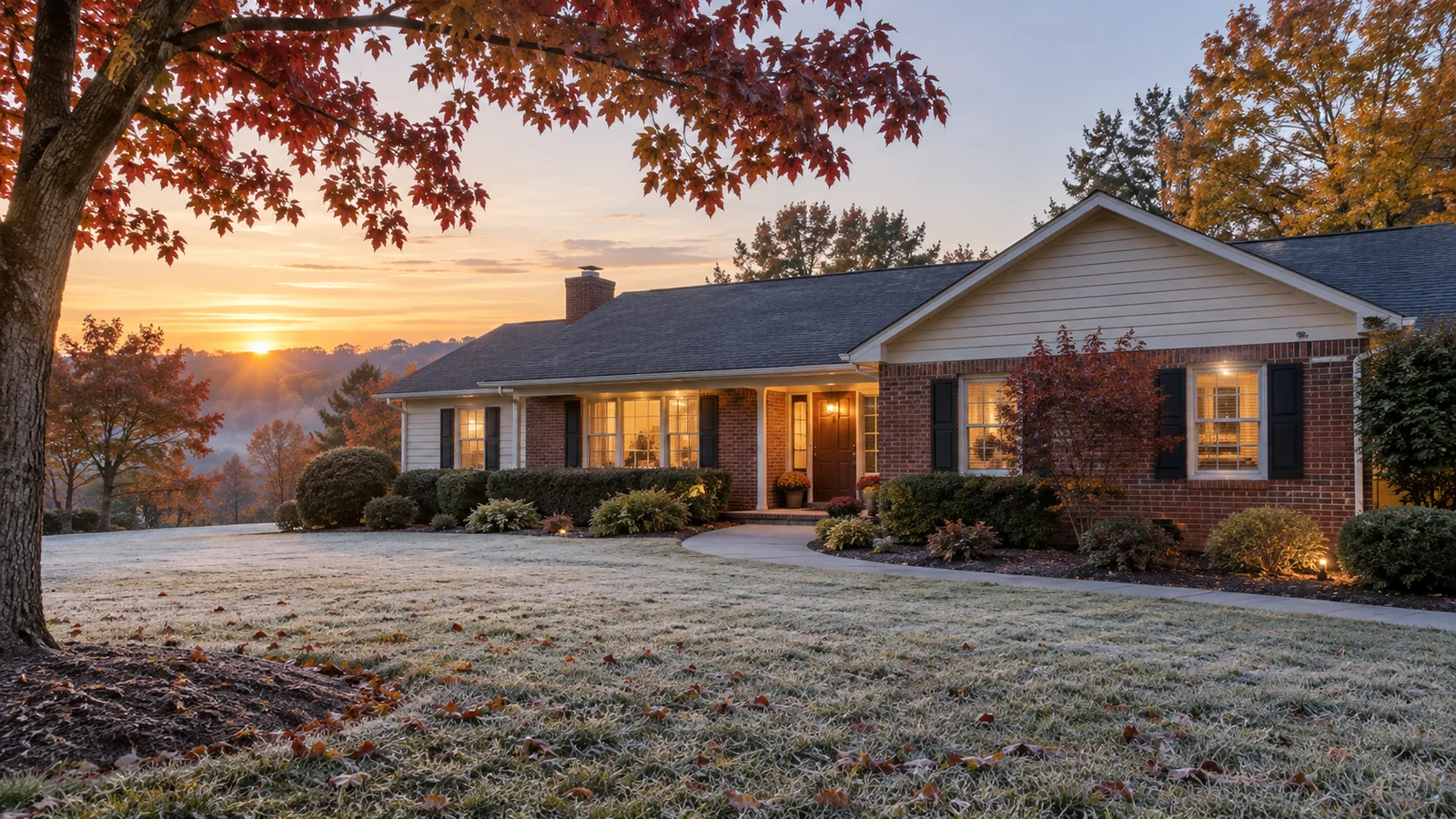
You're preparing to list your Greensboro home for sale, and your real estate agent just walked through with a notepad full of recommendations: paint the front door, update the kitchen hardware, maybe replace that dated bathroom vanity. But then she mentions something you didn't expect: "You might want to consider upgrading your attic insulation."
Wait—insulation? Buyers can't even see that. Does it actually affect home value, or is this just another expense before you can finally sell? Let's cut through the real estate platitudes and talk actual numbers: how insulation upgrades impact resale value, buyer appeal, and whether investing in insulation before selling makes financial sense.
The Short Answer: Yes, But It's Complicated
New insulation can increase your home's resale value by 2-6% depending on various factors. On a $300,000 home in the Triad area, that's potentially $6,000-$18,000 in added value. However, the real benefit often isn't captured in the appraised value—it's in buyer appeal, faster sales, and stronger offers.
Here's why insulation is different from, say, granite countertops: buyers might not see it during showings, but they'll absolutely notice its effects (comfortable temperatures, low utility bills) and appreciate it when making an offer.
How Insulation Affects Formal Home Appraisals
Let's address the elephant in the room: does insulation show up in formal appraisals?
The Appraisal Reality
Traditional appraisals focus on tangible, easily comparable features:
- Square footage
- Number of bedrooms and bathrooms
- Lot size
- Recent comparable sales
- Overall condition and updates
Insulation alone doesn't typically appear as a line item. An appraiser won't add $5,000 to your home's value just because you upgraded to R-49 attic insulation. They're comparing your home to recently sold comparable homes, and unless those comps also specify insulation levels (they usually don't), insulation isn't directly factored in.
The Indirect Appraisal Impact
However, insulation affects appraisals indirectly through:
- Overall condition rating: A well-maintained, energy-efficient home rates higher
- Energy efficiency features: Some appraisers note energy improvements in their reports
- Modern standards compliance: Meeting current building codes adds value
- Comparable quality: Energy-efficient homes tend to compare favorably to similar properties
Where Insulation Really Adds Value: Buyer Psychology
This is where insulation becomes a powerful selling tool. While it might not dramatically move the appraisal needle, it absolutely influences buyer decision-making.
The National Association of Realtors Data
According to NAR surveys, heating and cooling efficiency is the #1 "green" feature buyers look for—more than solar panels, energy-efficient appliances, or sustainable materials. When buyers know a home has proper insulation and low utility costs, they're:
- More likely to make an offer
- Willing to offer closer to (or above) asking price
- Less likely to negotiate aggressively on price
- More confident in their purchase decision
The Utility Bill Factor
Here's a real-world scenario that plays out in Triad-area home sales constantly:
Seller A: Lists home at $325,000, no insulation upgrades, average monthly utility bills of $225
Seller B: Lists comparable home at $330,000, upgraded insulation, average monthly utility bills of $160
Seller B's home not only sells faster—it often gets full price or better offers. Why? Buyers calculate long-term costs. Over a 30-year mortgage, Seller B's home saves buyers $23,400 in utility costs. That's real money that influences purchase decisions.
The Numbers: ROI on Insulation for Resale
Let's talk real return on investment for insulation when you're selling:
Scenario 1: Upgrading Before Sale
- Home value: $300,000
- Insulation upgrade cost: $2,500
- Modest home value increase: 2% = $6,000
- Net gain: $3,500
- ROI: 140%
But that's just the direct value increase. Factor in:
- Faster sale (worth $1,000-2,000 in carrying costs)
- Fewer buyer objections during inspection
- Stronger negotiating position
- Competitive advantage over similar listings
Scenario 2: Selling As-Is
If you don't upgrade insulation and buyers discover inadequate insulation during home inspection, expect:
- Repair credits of $2,000-4,000
- Reduced offers to account for needed work
- Deal falling through (buyers walking away)
- Longer time on market
Suddenly that $2,500 insulation upgrade looks pretty smart.
When Insulation Upgrades Make the Most Sense Before Selling
Not every home needs insulation upgrades before listing. Here's when it's most valuable:
Strong ROI Situations:
- Severely inadequate insulation: If you have R-11 or less, upgrading to R-38+ shows dramatic improvement
- Failed home inspection previously: If past inspections flagged insulation, address it proactively
- Competitive market: When multiple similar homes are for sale, energy efficiency differentiates yours
- Slow spring/summer market: When sales are sluggish, energy efficiency appeals to cost-conscious buyers
- Historic or older homes: Buyers expect older homes to have issues; proving you've addressed energy efficiency builds confidence
Lower Priority Situations:
- Already have R-38+: You've already got proper insulation—further upgrades show diminishing returns
- Hot seller's market: When homes sell in days above asking price, insulation won't significantly impact price
- Major renovations needed: If buyers are planning to gut-renovate anyway, insulation won't influence their decision
- Ultra-low-end market: In the lowest price segments, buyers are often stretching budgets and won't pay premium for efficiency
How to Maximize Insulation's Impact on Sale Price
If you decide to upgrade insulation before selling, maximize your ROI with these strategies:
1. Document Everything
Get receipts, energy audit reports, and before/after photos. Create a "Home Information Binder" for potential buyers showing:
- What was upgraded (R-19 to R-49)
- When it was done
- What it cost
- Expected energy savings
- Any warranties
Buyers love documentation—it proves the work was done professionally and recently.
2. Get a Home Energy Audit
A professional energy audit costs $200-400 but provides third-party verification of your home's energy efficiency. The report becomes powerful marketing material: "Professionally certified energy-efficient home."
3. Highlight in Listing Materials
Work with your realtor to emphasize energy efficiency:
- Listing description: "Recently upgraded to R-49 attic insulation"
- Feature sheet: "Low utility bills—$160/month average"
- Open house signs: "Energy-efficient home"
- Photos: Before/after of attic (showing improvement)
4. Provide Utility Bill History
Offering 12 months of utility bills shows buyers actual costs. Low bills are incredibly persuasive—they prove your insulation upgrade works.
5. Time it Right
Upgrade insulation in spring before the summer selling season. When buyers tour your home on a 90°F July day and it's comfortably cool without the AC running constantly, they notice.
Insulation vs. Other Pre-Sale Improvements: ROI Comparison
How does insulation compare to other common pre-sale upgrades?
- Minor kitchen remodel: 75-85% ROI
- Bathroom remodel: 60-70% ROI
- New windows: 70-75% ROI
- New siding: 75-80% ROI
- Attic insulation upgrade: 100-140% ROI
Insulation delivers one of the highest ROIs of any pre-sale improvement. Plus, it's one of the least expensive—you can upgrade insulation for $2,000-3,000 versus $15,000-30,000 for a kitchen remodel.
The Inspection Advantage
Here's a scenario that plays out constantly in real estate transactions:
Buyers make an offer, then conduct a home inspection. The inspector reports inadequate attic insulation (a common finding in older North Carolina homes). Now buyers have leverage to:
- Request repair credits
- Renegotiate price
- Walk away from the deal entirely
By upgrading insulation before listing, you:
- Eliminate this negotiation point
- Show the home is well-maintained
- Reduce chances of deals falling through
- Control the quality and cost of the upgrade (instead of accepting buyer credit demands)
Regional Considerations for North Carolina Homes
In the Triad area—Greensboro, Winston-Salem, and High Point—energy efficiency is particularly valued because:
- Hot, humid summers mean high cooling costs
- Many buyers are relocating from areas with lower utility costs
- Duke Energy rates have increased 25% since 2021
- Buyers are increasingly cost-conscious about ongoing expenses
Homes with proper insulation have a competitive advantage in our market.
When NOT to Upgrade Insulation Before Selling
Be strategic. Don't upgrade insulation if:
- You're listing below $150,000 in a fast-moving market
- The property is being sold as a tear-down or major fixer-upper
- You already have adequate insulation (R-38+)
- You need to list immediately and can't wait for the work
- Other major issues exist that will overshadow insulation (foundation problems, roof failure, etc.)
The Long-Term Value Perspective
Here's something most sellers don't consider: if you're not selling immediately, insulation upgrades deliver value two ways:
While you still own the home:
- Lower utility bills (savings $300-600 annually)
- Improved comfort
- Reduced HVAC wear
When you eventually sell:
- Higher resale value
- Faster sale
- Stronger negotiating position
If you're planning to sell in 3-5 years, upgrading insulation now means you enjoy the benefits while you live there AND recoup the investment when you sell. That's a true win-win.
The Bottom Line: Should You Upgrade Before Selling?
For most North Carolina homeowners with inadequate attic insulation (R-19 or less), upgrading before selling delivers:
- 100-140% ROI through direct value increase
- Faster sale (worth thousands in carrying costs)
- Stronger buyer confidence
- Fewer inspection negotiation issues
- Competitive advantage in the market
It's one of the highest-ROI, lowest-cost improvements you can make before listing your home.
Getting It Done Right
If you're preparing to sell and want to maximize your home's value, At 4 Seasons Insulation can help. We provide:
- Quick-turnaround installations for sellers
- Detailed documentation for listing materials
- Energy assessment reports for buyer confidence
- Professional work that passes inspection
- Competitive pricing that maximizes your ROI
We work with real estate agents throughout the Triad area and understand what buyers look for in home inspections.
Thinking about selling your home? Contact us for a free assessment and honest advice about whether insulation upgrades make sense for your specific situation. We'll help you make the smart decision—whether that's upgrading before you list or selling as-is.
Because the best pre-sale improvements are ones that pay for themselves—and then some.