You have $3,500 budgeted for insulation improvements. Your home needs both attic and wall insulation upgrades. Your contractor says you can either: (A) fully upgrade your attic to R-49, or (B) partially insulate your walls. You can't afford both right now. Which delivers better bang for your buck in North Carolina?
This is one of the most common dilemmas homeowners face. The answer might surprise you—and it's backed by building science, energy modeling, and real-world data. Let's break down the physics, the costs, and the priority order to help you make the smart choice.
The Short Answer: Attic Insulation Comes First (Almost Always)
For North Carolina homes, attic insulation almost always delivers better ROI than wall insulation. Here's why:
- Physics: Heat rises—your attic is the primary battleground for heat gain/loss
- ROI: Attic insulation typically returns 2-3x better payback than wall insulation
- Cost-effectiveness: Easier and cheaper to install, more bang per buck
- Impact: Typically delivers 60-70% of total potential insulation savings
But there ARE exceptions. Let's dive deeper so you understand not just what to prioritize, but why.
Understanding Heat Flow in Your Home
Before comparing attic vs. wall insulation, understand where you're losing (and gaining) heat:
Typical Heat Loss/Gain Distribution in NC Homes
- Attic/Ceiling: 25-35% of heat transfer
- Walls: 15-25% of heat transfer
- Windows/Doors: 20-30% of heat transfer
- Air Leaks: 15-25% of heat transfer
- Floors/Crawl Space: 10-15% of heat transfer
Your attic represents the single largest individual source of heat gain in summer and heat loss in winter. But why?
Why Attics Matter More: The Stack Effect
Warm air rises (thermodynamics 101). In summer, heat from your 145°F attic tries to move down into your cool living space. In winter, heat from your warm living space tries to escape upward through the ceiling.
This natural convection (called the "stack effect") means your attic/ceiling boundary experiences more heat transfer pressure than walls. Heat doesn't "prefer" moving sideways through walls—it wants to rise.
Surface Area Reality
Your attic ceiling is a single large surface—let's say 1,800 square feet. Your exterior walls might total 1,400 square feet across four walls, but they're vertical (less heat pressure) and partially interrupted by windows (which we're not addressing with insulation).
More area + more heat pressure = bigger impact opportunity.
Attic Insulation: The High-Impact Priority
Why It's Usually First Priority
1. Highest ROI
Typical payback for attic insulation in NC: 5-8 years
Example:
- Cost to upgrade from R-15 to R-49 (1,800 sq ft attic): $2,800
- Annual energy savings: $350-500
- Payback: 5.6-8 years
2. Easiest and Cheapest to Install
Attic insulation installation is straightforward:
- Access through attic hatch
- Blow insulation across attic floor
- No demolition or reconstruction
- Typically completed in one day
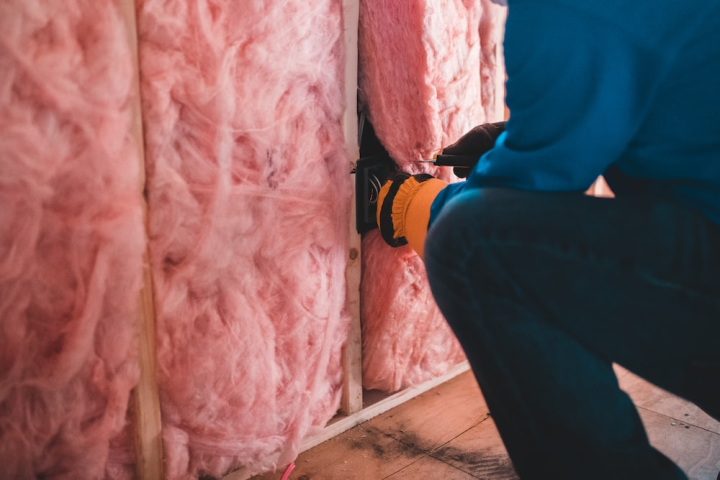
Wall insulation is more complex:
- Requires drilling holes through exterior or removing drywall
- More labor-intensive
- Often requires patching and repainting
- Takes multiple days
3. Immediate Comfort Impact
Homeowners notice attic insulation improvements within days:
- Upstairs bedrooms cooler in summer
- More even temperatures throughout home
- AC runs less frequently
- Warmer ceilings in winter
4. Protects HVAC Equipment
Many homes have ductwork in the attic. Better attic insulation creates a cooler attic environment, reducing thermal stress on ducts and HVAC equipment.
Cost Range for Attic Insulation
North Carolina homes (blown fiberglass to R-49):
- 1,200 sq ft attic: $1,800-2,400
- 1,800 sq ft attic: $2,400-3,200
- 2,400 sq ft attic: $3,200-4,200
Add $600-1,200 for comprehensive air sealing (highly recommended).
Wall Insulation: The Secondary Priority
When It Makes Sense
Wall insulation becomes higher priority if:
1. Attic Already Has Adequate Insulation (R-38+)
If your attic is already well-insulated but walls are uninsulated, walls become the next logical target.
2. Single-Story Home with Flat or Cathedral Ceiling
Homes without traditional attic space (cathedral ceilings, flat roofs) have different heat dynamics. Wall insulation might be equally or more important.
3. Extreme Wall Conditions
Homes with single-pane windows, no wall insulation, and significant wall exposure (especially west-facing walls getting afternoon sun) might benefit more from wall work.
4. Bonus Room Above Garage
Rooms built over garages often have exterior walls on three sides with minimal insulation. These might benefit more from wall insulation than general attic work.
Types of Wall Insulation
Blown-In (Retrofit):
- Drill holes in exterior or interior walls
- Blow dense-pack cellulose or fiberglass
- Patch holes and touch up paint
- Cost: $1.50-3.00 per square foot
Injection Foam (Retrofit):
- Similar process but with expanding foam
- Better air sealing properties
- More expensive: $2.50-4.50 per square foot
Spray Foam (Requires Wall Opening):
- Requires removing drywall
- Excellent performance and air sealing
- Most expensive: $3.00-6.00 per square foot
- Only practical during major renovations
Cost Range for Wall Insulation
Typical single-story home (1,400 sq ft of exterior wall, excluding windows):
- Blown-in cellulose: $2,100-4,200
- Injection foam: $3,500-6,300
For the same budget as attic insulation, you get less coverage and lower ROI.
The Priority Ranking: Where to Spend Your Money
If you have limited budget and must prioritize, here's the recommended order for North Carolina homes:
Priority #1: Air Sealing
Cost: $600-1,200
ROI: Often delivers 20-30% of potential savings for 10-15% of total insulation budget
Air sealing gaps, penetrations, and bypasses should come BEFORE adding insulation. Air leaks undermine insulation performance. According to ENERGY STAR, air sealing can save 10-20% on heating and cooling costs.
Priority #2: Attic Insulation to R-49
Cost: $1,800-4,200 depending on size
ROI: 5-8 year payback
Get your attic to recommended R-49. This delivers the biggest bang for your buck and addresses the primary heat gain/loss pathway.
Priority #3: Crawl Space (If Applicable)
Cost: $2,500-6,000 for encapsulation
ROI: 8-12 year payback, plus structural protection
If you have a crawl space with moisture issues or failed insulation, address this before walls. Moisture problems cause structural damage that's expensive to fix later.
Priority #4: Wall Insulation
Cost: $2,100-6,300+ depending on method and area
ROI: 10-15 year payback
Once attic and crawl space (if applicable) are addressed, walls become the next logical upgrade.
Priority #5: Ductwork Sealing/Insulation
Cost: $600-1,500
ROI: Varies, but often 15-20% improvement in HVAC efficiency
If ducts are in unconditioned spaces (attic, crawl space), sealing and insulating them prevents energy loss.
The Budget Scenarios: What to Do With Different Amounts
Scenario A: $1,500 Budget
Recommendation: Air sealing ($800) + partial attic insulation improvement ($700)
Focus on the fundamentals. Get attic to R-30-35 if currently inadequate, and seal all air leaks.
Scenario B: $3,000 Budget
Recommendation: Air sealing ($800) + full attic insulation to R-49 ($2,200)
Complete the attic properly. This gives you the highest-impact improvement first.
Scenario C: $5,000 Budget
Recommendation: Air sealing ($800) + attic to R-49 ($2,400) + crawl space vapor barrier and basic treatment ($1,800)
Address attic and crawl space—the two most critical areas. Defer walls to future.
Scenario D: $8,000+ Budget
Recommendation: Air sealing ($800) + attic to R-49 ($2,600) + crawl space encapsulation ($3,200) + high-priority wall sections ($1,400)
Now you can add targeted wall insulation in problem areas (west-facing walls, bonus rooms, etc.).
The Exceptions: When Walls Come First
Rare scenarios where wall insulation should be prioritized:
Exception #1: Attic Already Adequate
If you have R-38+ attic insulation but zero wall insulation, walls become the next logical step.
Exception #2: No Traditional Attic
Homes with cathedral ceilings throughout (no attic space to insulate) make wall insulation equally important.
Exception #3: Major Renovation Underway
If you're already opening walls for other work (electrical, plumbing, remodeling), adding insulation while walls are open is cost-effective.
Exception #4: Specific Problem Walls
A room built over a garage with three exterior walls might need wall insulation more urgently than general attic work.
Measuring Your Current Situation
Before deciding, assess what you actually have:
Check Your Attic
- Measure insulation depth in multiple spots
- 3-6 inches = R-11 to R-19 (needs major upgrade)
- 8-10 inches = R-25 to R-30 (needs some upgrade)
- 12-14 inches = R-38 to R-44 (close to optimal)
- 16+ inches = R-49+ (adequate)
Check Your Walls
Harder to assess without opening walls, but indicators:
- Home built before 1980: Likely minimal or no wall insulation
- Home built 1980-2000: Probably has some wall insulation (R-11 to R-13)
- Home built after 2000: Likely has R-13 to R-15
You can also hire a professional with thermal imaging to identify uninsulated wall cavities.
Real-World Example: The Smith Family
The Smiths in Greensboro had $4,000 to spend. Their 1975 home had:
- Attic: R-15 (inadequate)
- Walls: Uninsulated (based on home age and thermal imaging)
Option A: Split Budget
- Attic to R-30 (partial upgrade): $1,500
- Insulate two exterior walls: $2,500
- Total: $4,000
- Projected annual savings: $280
Option B: Attic Priority (Our Recommendation)
- Air sealing: $700
- Attic to R-49 (full upgrade): $2,500
- Reserve remaining budget for next year: $800
- Total spent: $3,200
- Projected annual savings: $420
They chose Option B. After one year:
- Actual annual savings: $465
- Comfort improvement: Significant (upstairs 5°F cooler in summer)
- Year 2 plan: Use reserved $800 + new budget to address one wall
By prioritizing attic, they got better ROI immediately and set themselves up to address walls next.
Making Your Decision
Ask yourself:
- What's my current attic R-value? (If below R-38, prioritize attic)
- Do I have a traditional attic or cathedral ceiling? (Traditional = attic priority)
- What's my budget? (Under $5,000 = focus on attic; over $8,000 = can do both)
- Do I have crawl space moisture issues? (If yes, that might come before walls)
- Am I planning renovations that involve opening walls? (If yes, add insulation then)
Get Expert Guidance
At 4 Seasons Insulation, we help homeowners throughout Winston-Salem, High Point, and the Triad area prioritize their insulation investments for maximum ROI.
Our comprehensive assessment includes:
- Current R-value measurements (attic and walls if accessible)
- Thermal imaging to identify problem areas
- Cost-benefit analysis for different approaches
- Phased implementation plans if budget is limited
- Honest recommendations (we'll tell you what delivers best ROI first)
We've helped hundreds of families make smart prioritization decisions. We'll show you which improvements deliver the most bang for your specific budget.
Trying to decide between attic and wall insulation? Contact us for a free assessment. We'll measure your current situation, explain your options, and help you invest your budget where it delivers maximum impact.
Because smart prioritization means better comfort, faster payback, and less money wasted on low-ROI improvements.
Attic first. Walls second. That's the science-backed priority for most NC homes.