Your crawl space has standing water after every heavy rain. Your contractor quotes you $3,500 for a French drain, but your neighbor says he solved his moisture problem with just $200 of grading work. Another friend swears by his sump pump. Who's right? Which drainage solution actually works?
The answer: it depends on your specific situation. French drains aren't always necessary, but when they are, nothing else works as well. This guide breaks down all the major drainage solutions—what they do, when they work, and how to choose the right one for your North Carolina home's moisture problems.
First: Identify Your Water Problem
Before choosing a solution, understand what type of water problem you have:
Surface Water Runoff
Rain flows across your yard toward and under your house. Common on sloped lots where homes sit downhill or mid-slope.
Indicators:
- Standing water appears during or right after rain
- Water flows toward foundation
- Problem worse after heavy rain, better during dry periods
Groundwater Intrusion
Water table is high; groundwater seeps through foundation or up through crawl space floor. Common in low-lying areas or homes near water bodies.
Indicators:
- Water present even without recent rain
- Consistent dampness year-round
- Water "rises" from ground rather than flowing in
Poor Grading
Yard slopes toward house instead of away, directing all water toward foundation.
Indicators:
- Visible slope toward house
- Water pools against foundation
- Gutters work fine but water still enters crawl space
Inadequate Gutters/Downspouts
Roof water isn't being directed away from foundation.
Indicators:
- Gutters missing, clogged, or damaged
- Downspouts dump water within 3 feet of foundation
- Problem concentrated near downspout discharge points
The Drainage Solutions: Complete Breakdown
Solution #1: Proper Grading and Swales
What it is: Reshaping yard to slope away from foundation (minimum 6 inches drop over 10 feet)
How it works: Gravity directs surface water away from house
Best for:
- Surface water problems
- Poor grading causing water to flow toward house
- Homes on relatively flat lots
Cost: $500-2,500 depending on extent of regrading needed
Pros:
- Relatively inexpensive
- No ongoing maintenance
- Often solves problem completely if grading is the only issue
Cons:
- Doesn't help with groundwater issues
- Can be difficult on established landscaping
- May not be possible with limited yard space
When it works: If your primary problem is surface water flowing toward your foundation due to poor grading, fixing the grade often solves 70-90% of the issue.
Solution #2: Extended Downspouts and Splash Blocks
What it is: Extending gutter downspouts to discharge 10+ feet from foundation
How it works: Moves roof water away from foundation before it can seep down
Best for:
- Problems concentrated near downspouts
- Homes with functional gutters but short downspouts
- As first step before more expensive solutions
Cost: $200-800 for all downspouts (can be DIY for less)
Pros:
- Very inexpensive
- Quick fix
- Often surprisingly effective
Cons:
- Above-ground extensions can be tripping hazards or eyesores
- Doesn't address non-gutter-related water
- May freeze in winter (less issue in NC)
When it works: You'd be surprised how often this simple fix solves crawl space moisture problems. Always try this before more expensive options.
Solution #3: French Drains
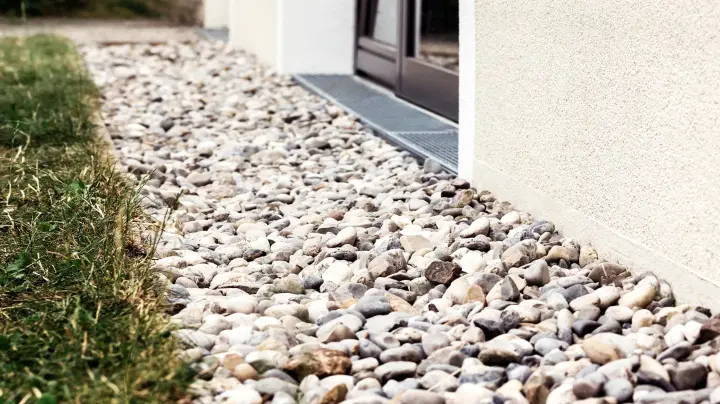
What it is: Perforated pipe buried in gravel-filled trench, collecting and redirecting subsurface water
How it works: Water flows into perforated pipe and is carried to daylight drainage point or dry well
Best for:
- Intercepting water flowing downslope toward house
- Lowering water table around foundation
- Collecting water from multiple sources
- Situations where grading alone won't work
Cost: $2,500-7,000+ depending on length and complexity
Pros:
- Very effective for subsurface water
- Works even on lots with challenging topography
- Long-lasting when installed correctly
- Can handle large volumes of water
Cons:
- Expensive
- Requires excavation (disrupts yard/landscaping)
- Can clog over time if not properly designed
- Needs outlet point lower than starting point
When it works: French drains are the gold standard for subsurface water management. If you have water flowing toward your house from uphill, or water table issues, French drains are often the only permanent solution.
Solution #4: Interior Perimeter Drains + Sump Pump
What it is: Drain system installed inside crawl space perimeter, collecting water and pumping it out
How it works: Water entering crawl space flows to perimeter drain, collects in sump basin, pump removes it
Best for:
- Groundwater intrusion through floor or walls
- When exterior drainage isn't possible
- Basements with water seepage
- Situations where water table is above crawl space floor
Cost: $2,000-6,000 depending on crawl space size and complexity
Pros:
- Works when exterior solutions aren't viable
- Handles groundwater effectively
- Can be combined with encapsulation
Cons:
- Requires electricity (pump can fail)
- Ongoing maintenance (pump, battery backup)
- Doesn't prevent water from entering—just removes it
- More complex installation
When it works: When water is coming up through the ground (high water table) rather than flowing in from outside, interior drainage with sump pump is often the best solution.
Solution #5: Curtain Drains
What it is: Similar to French drain but typically shallower and designed to intercept surface water before it reaches foundation
How it works: Installed upslope from house to "catch" water flowing toward foundation
Best for:
- Homes on sloped lots with water flowing from uphill
- Intercepting surface and shallow subsurface water
- Protecting large areas
Cost: $1,500-4,500 depending on length
Pros:
- Prevents water from reaching foundation area
- Less invasive than foundation perimeter drains
- Protects entire structure
Cons:
- Requires space upslope for installation
- Still requires excavation
- Needs proper outlet
When it works: Excellent for homes where water clearly flows from uphill toward the house. Acts as the first line of defense.
Solution #6: Dry Wells
What it is: Underground pit filled with gravel where water collects and slowly percolates into soil
How it works: Serves as terminus for downspouts or drainage pipes when daylight drainage isn't available
Best for:
- Situations where you can't drain to daylight
- Disposing of roof water
- Properties with well-draining soil
Cost: $500-1,500 per dry well
Pros:
- Works when slope doesn't allow daylight drainage
- No discharge across neighbor's property
- Environmentally friendly (water returns to ground)
Cons:
- Only works in well-draining soil
- Can fail in heavy clay or high water table
- May eventually fill with sediment
- Not suitable for large volumes
When it works: Best as part of downspout extension system when you have good soil drainage but nowhere to run surface drainage.
The Decision Matrix: Which Solution for Your Situation?
Scenario A: Water Against Foundation After Rain
Most Likely Cause: Poor grading or inadequate downspout extensions
Solution Priority:
- Extend downspouts ($200-500)
- Improve grading ($500-1,500)
- If problem persists: French drain ($2,500-5,000)
Scenario B: Standing Water in Crawl Space from Uphill Runoff
Most Likely Cause: Surface and subsurface water flowing from upslope
Solution Priority:
- Curtain drain upslope to intercept flow ($2,000-4,000)
- Improve grading around foundation ($500-1,500)
- Interior perimeter drain if water still enters ($2,500-4,500)
Scenario C: Persistent Dampness Even Without Rain
Most Likely Cause: High water table or groundwater intrusion
Solution Priority:
- Interior perimeter drain + sump pump ($3,000-6,000)
- Exterior foundation drain if accessible ($3,500-7,000)
- Full crawl space encapsulation with dehumidification ($4,000-8,000)
Scenario D: Water Pooling in One Area of Yard
Most Likely Cause: Low spot collecting water
Solution Priority:
- Regrade to eliminate low spot ($400-1,200)
- Install swale or catch basin to direct water away ($800-2,000)
- If regrading not possible: French drain from low spot to outlet ($1,500-3,500)
The Combination Approach: When You Need Multiple Solutions
Often, the best solution combines multiple approaches:
Typical Comprehensive Solution
- Fix gutters and extend downspouts: Address roof water first ($300-800)
- Improve grading: Direct surface water away ($500-2,000)
- Install French drain: Handle subsurface water ($2,500-5,000)
- Encapsulate crawl space: Control remaining moisture ($3,500-7,000)
Total investment: $6,800-14,800
This seems expensive, but it permanently solves moisture problems and protects your home's structure. Compare that to ignoring the problem and eventually facing $15,000-30,000 in structural repairs from wood rot.
DIY vs. Professional Installation
Good DIY Projects
- Extending downspouts with PVC or flexible extensions
- Installing splash blocks
- Minor grading improvements (adding soil to slope away)
- Cleaning existing drains
Hire a Professional For
- French drain installation (proper slope critical)
- Major grading work (requires equipment and expertise)
- Interior perimeter drains and sump pump installation
- Anything requiring excavation near foundation
- Situations where improper work could make problems worse
Common Mistakes to Avoid
Mistake #1: Jumping to Most Expensive Solution First
Always start with simple fixes. We've seen $5,000 French drains installed when $300 of downspout extensions would have solved the problem.
Mistake #2: French Drain Without Proper Outlet
French drains need somewhere to drain TO. If there's no lower point to discharge water, the drain will eventually fill and fail.
Mistake #3: Ignoring Soil Type
Heavy clay soil doesn't absorb water quickly. Solutions that work in sandy soil might fail in clay.
Mistake #4: No Filter Fabric
French drains need filter fabric to prevent soil from clogging perforations. Skipping this leads to premature failure.
Mistake #5: Addressing Symptoms Instead of Cause
A sump pump removes water, but if you don't address WHY water is entering, you're just managing symptoms. Fix the source when possible.
Get Expert Assessment
At 4 Seasons Insulation, we regularly work with drainage issues as part of crawl space encapsulation projects. We can assess your specific situation and recommend the right drainage solutions—often catching problems that less experienced contractors miss.
Our drainage assessment includes:
- Site inspection to identify water sources and flow patterns
- Soil and topography evaluation
- Honest assessment of what's actually needed (we won't oversell)
- Multiple solution options with cost estimates
- Phased approaches if budget is limited
- Coordination with encapsulation work when appropriate
We serve homeowners throughout Greensboro, Winston-Salem, and High Point who need drainage solutions as part of comprehensive moisture control.
Dealing with water problems around your foundation or in your crawl space? Contact us for an assessment. We'll identify the source of your moisture issues and recommend the right solution—whether that's simple downspout extensions or comprehensive French drain installation.
Because the right drainage solution depends on accurate diagnosis of your specific problem. One size doesn't fit all.
Stop the water. Protect your home.