If you've been researching ways to keep your North Carolina home cooler in summer without mortgaging your house to pay the electric bill, you've probably come across the term "AtticFoil" or "radiant barrier." At first glance, the idea sounds almost too simple: install some shiny foil in your attic and magically reduce cooling costs? It seems like the kind of thing late-night infomercials would sell right after the miracle kitchen gadget.
But here's the thing—radiant barriers actually work, and they're particularly effective in hot, sunny climates like the Triad area of North Carolina. Let's demystify AtticFoil, explain how radiant barriers work, and help you understand whether this technology makes sense for your home.
What Exactly Is AtticFoil?
AtticFoil is a brand name for radiant barrier products, but the term has become somewhat genericized (like "Kleenex" for tissues). Essentially, AtticFoil is a reflective material—typically pure aluminum foil laminated to a strong, tear-resistant backing material—designed to reflect radiant heat instead of absorbing it.
Think of it as a mirror for heat. When sunlight beats down on your roof all day (and in North Carolina summers, it beats down hard), your roof surface can reach 160-170°F. That heat radiates down into your attic, superheating the air to 130-150°F. Without a radiant barrier, that heat then radiates through your insulation and into your living space, making your air conditioner work overtime.
AtticFoil reflects up to 97% of that radiant heat back toward the roof, preventing it from heating up your attic in the first place. The result? A cooler attic, less stress on your AC, and lower energy bills.
How Does It Work? The Science Made Simple
To understand radiant barriers, you need to know that heat transfers in three ways:
- Conduction: Heat moving through direct contact (like touching a hot stove)
- Convection: Heat moving through air or liquid currents
- Radiation: Heat moving through electromagnetic waves (like the sun warming your face)
Traditional attic insulation is great at slowing conduction and convection—it creates a barrier of trapped air that resists heat flow. But radiant heat? It passes right through standard insulation like it's barely there.
That's where radiant barriers come in. The shiny aluminum surface reflects radiant heat before it can be absorbed. It's the same principle as those windshield sunshades that keep your car cooler in a parking lot—the reflective surface bounces heat away instead of absorbing it.
The Technical Stuff (For the Nerds)
If you want to get technical, AtticFoil has an "emissivity" rating of about 0.03, meaning it emits only 3% of the radiant heat that hits it and reflects the other 97%. Compare that to standard building materials like wood or asphalt shingles, which have emissivity ratings of 0.90 or higher—they're absorbing and re-radiating almost all the heat.
When installed properly with an air gap, the radiant barrier prevents radiant heat transfer across that gap, significantly reducing heat gain in your attic.
AtticFoil vs. Traditional Insulation: What's the Difference?
Here's a critical point that confuses many homeowners: radiant barriers and traditional insulation are not the same thing, and one doesn't replace the other. They work together.
- Traditional insulation (fiberglass, cellulose, etc.): Has an R-value, slows conductive and convective heat transfer, works year-round for both heating and cooling
- Radiant barriers (AtticFoil): Has no R-value, reflects radiant heat, primarily benefits cooling in sunny climates
Think of traditional insulation as a down jacket—it keeps heat from moving through it. Radiant barriers are like a sun hat—they reflect heat before it can be absorbed. You want both for maximum effectiveness.
A well-prepared attic should have adequate insulation (R-49 for North Carolina's Climate Zone 4) AND a radiant barrier. Together, they create a powerful defense system against summer heat.
Installation Methods: How AtticFoil Goes In
There are two main ways to install radiant barriers in your attic:
Method 1: Staple-Up to Rafters (Most Common)
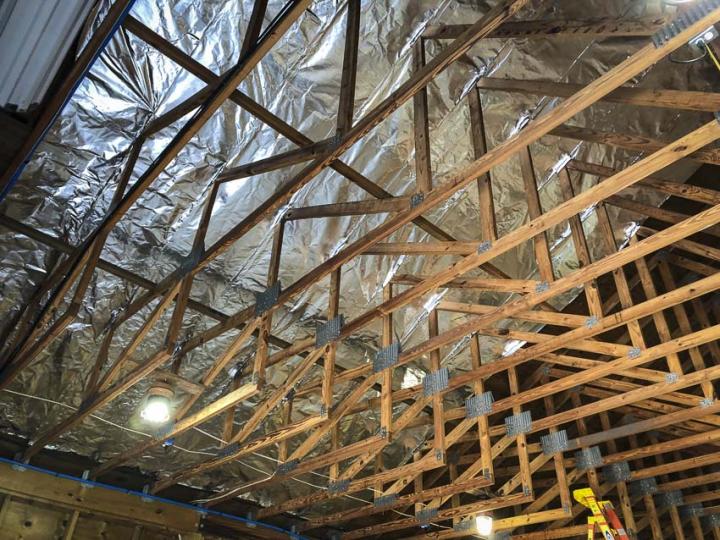
This is the most popular installation method. The radiant barrier is stapled horizontally to the underside of your roof rafters, creating a reflective surface beneath your roof deck.
Key installation details:
- Start at the bottom (near the eaves) and work upward
- Overlap seams by 2-3 inches
- Stop 3-6 inches from the ridge to allow hot air to escape
- Don't block soffit vents—air needs to flow from soffit to ridge
Benefits of staple-up installation:
- Creates a cooler overall attic environment
- Keeps HVAC equipment and ductwork in a cooler space (if they're in your attic)
- Allows you to still use your attic for storage
- Doesn't interfere with existing or future floor insulation
Method 2: Laid Over Attic Floor Insulation
In this method, the radiant barrier is simply laid on top of your existing attic floor insulation like a blanket.
Benefits:
- Easier installation (no climbing around rafters)
- Less material needed
- Can be a DIY project
Drawbacks:
- Your attic will still get hot (it only protects what's beneath the barrier)
- Makes the attic floor unusable for storage (you can't walk on foil)
- HVAC equipment and ducts (if in attic) will still be in hot environment
- Dust accumulation on the foil reduces effectiveness over time
For most homes, the staple-up method is the better choice despite requiring more effort to install.
How Much Can AtticFoil Save You?
Let's talk numbers—because the whole point is saving money, right?
According to studies from the Department of Energy and various field tests, radiant barriers in hot, sunny climates can reduce cooling costs by 5-17%, with most homeowners seeing 10-15% savings. In the Triad area with our intense summer sun, you're likely on the higher end of that range.
For a typical Greensboro, Winston-Salem, or High Point home spending $200-250/month on cooling in summer:
- 10% savings: $20-25/month = $60-75 per summer
- 15% savings: $30-37/month = $90-110 per summer
Over 10 years, that's $600-1,100 in savings—and that's assuming energy rates don't increase (spoiler: they will).
Installation costs for a typical attic run $500-1,500 depending on size and complexity, meaning payback period is typically 5-10 years. After that, it's pure savings every summer for the life of your home.
Beyond Energy Savings: Other Benefits
Lower utility bills are great, but radiant barriers provide additional benefits:
Improved Comfort
By reducing attic temperatures by 20-30°F, radiant barriers make upstairs rooms noticeably more comfortable. If your second-floor bedrooms currently feel like you're sleeping in a pizza oven, a radiant barrier can help tremendously.
Extended HVAC Lifespan
When your AC doesn't have to work as hard to overcome heat gain from the attic, it experiences less wear and tear. Extending your HVAC system's life by even a few years saves thousands in replacement costs.
Better Ductwork Performance
If you have ductwork in your attic (common in many North Carolina homes), keeping your attic 20-30°F cooler means your ducts lose less cooling along the way. That 55°F air traveling through ducts in a 120°F attic loses less than in a 150°F attic.
Dust Reduction
The staple-up method creates a barrier between your roof deck and living space, reducing the amount of dust and debris that settles into your insulation.
When Does AtticFoil Make Sense?
Radiant barriers aren't right for every situation. Here's when they're most beneficial:
Great Candidates for Radiant Barriers:
- Homes in hot, sunny climates (that's you, North Carolina!)
- Homes with air conditioning
- Homes with ductwork in the attic
- Homes with rooms directly below the attic (especially second-floor bedrooms)
- Dark-colored roofs that absorb more heat
- Homes with existing adequate insulation (adding to inadequate insulation first delivers better ROI)
Less Beneficial Situations:
- Homes without AC (radiant barriers primarily reduce cooling costs)
- Homes in predominantly cold climates (though North Carolina has hot summers, so we benefit)
- Homes with cathedral ceilings where there's no attic space
- Homes with severely inadequate insulation (fix that first, then add radiant barrier)
DIY or Professional Installation?
Installing AtticFoil can be a DIY project if you're handy and comfortable working in your attic. You'll need:
- A staple gun and staples
- Utility knife for cutting
- Measuring tape
- Safety equipment (gloves, dust mask, adequate lighting)
- Patience and willingness to work in a hot attic
However, many homeowners opt for professional installation because:
- Attics in North Carolina summer are brutally hot work environments
- Proper installation requires attention to detail for maximum effectiveness
- Professionals can identify and address ventilation issues while installing
- You avoid potential mistakes that reduce effectiveness
- It's done quickly (professionals can complete most homes in a day)
AtticFoil + Insulation: The Dynamic Duo
Here's the key takeaway: AtticFoil radiant barriers work best as part of a comprehensive attic strategy, not as a standalone solution.
The optimal North Carolina attic includes:
- Adequate insulation: R-49 minimum for Climate Zone 4
- Radiant barrier: Reflects heat before it can be absorbed
- Proper ventilation: Allows hot air to escape
- Air sealing: Prevents conditioned air from escaping into attic
Together, these elements can reduce your cooling costs by 30-45% compared to an unprepared attic.
Common Questions About AtticFoil
Does it work in winter?
Radiant barriers provide minimal benefit for winter heating. They can slightly reduce radiant heat loss from the attic floor to the roof, but the effect is much less dramatic than summer cooling benefits. That said, they don't hurt heating efficiency either.
Will it interfere with my WiFi?
No. This is a persistent myth we'll address in detail later, but the short answer is that properly installed radiant barriers don't block WiFi signals any more than the other materials in your home.
How long does it last?
Quality radiant barrier products like AtticFoil are extremely durable and should last the lifetime of your home with no maintenance required.
Can I install it over spray foam insulation?
Yes, radiant barriers work well with any type of insulation, including spray foam.
The Bottom Line on AtticFoil
AtticFoil and other radiant barrier products are legitimate, effective technologies for reducing cooling costs in hot, sunny climates. They're not magic, and they don't replace traditional insulation, but they're a valuable addition to a comprehensive attic energy strategy.
For North Carolina homeowners, particularly in the Triad area, radiant barriers deliver measurable, noticeable benefits: lower cooling bills, improved comfort, and reduced stress on your HVAC system.
At 4 Seasons Insulation, we install radiant barriers as part of comprehensive attic upgrades. We'll assess your current attic setup, ensure you have adequate insulation first, and then install a radiant barrier for maximum summer performance.
Curious whether a radiant barrier makes sense for your home? Contact us for a free attic assessment. We'll evaluate your specific situation and provide honest recommendations about whether AtticFoil is a smart investment for your home.
Because life's too short to let the sun turn your home into a sauna while your AC runs non-stop trying to keep up.