Your insulation contractor just quoted you two options: "R-49 blown insulation for $2,400" or "R-49 blown insulation PLUS radiant barrier for $3,600." You're trying to figure out whether that extra $1,200 is a smart investment or expensive overkill. "Isn't insulation supposed to keep heat out?" you think. "Why do I need BOTH insulation AND a radiant barrier?"
Great question. Radiant barriers and traditional insulation work in fundamentally different ways—which means they're not competitors, they're teammates. But do you actually need both in North Carolina? Let's break down the science, the costs, and the real-world performance to help you make an informed decision.
Understanding the Two Types of Heat Transfer
To understand why radiant barriers and insulation are different, you need to understand heat transfer basics:
Conductive Heat Transfer
This is heat moving through direct contact. Touch a hot stove, your hand gets hot—that's conduction. In your attic, conductive heat moves through materials: from hot roof deck to insulation to ceiling below.
What stops it: Traditional insulation (fiberglass, cellulose, spray foam)
How it works: Insulation traps air in tiny pockets, creating resistance to heat flow (measured as R-value)
Radiant Heat Transfer
This is heat moving through electromagnetic waves (infrared radiation). Stand near a fire and feel warmth even though you're not touching flames—that's radiant heat. In your attic, radiant heat radiates from the hot roof deck downward toward insulation and living space below.
What stops it: Radiant barriers (reflective foil)
How it works: Reflective surfaces bounce radiant heat back toward its source instead of absorbing it
Why Both Matter in Your Attic
On a 95°F summer day in North Carolina:
- Your roof absorbs solar energy, heating roof deck to 160°F
- That 160°F roof radiates heat downward (radiant transfer) toward insulation
- Heat also conducts through roof sheathing and travels through insulation (conductive transfer)
- Both types of heat transfer work to make your living space hotter
Traditional insulation addresses conductive heat. Radiant barriers address radiant heat. Combining them tackles both heat transfer methods.
How Traditional Insulation Works
Let's start with what you definitely need: traditional insulation.
What It Does
Insulation resists conductive heat flow by trapping air in millions of tiny pockets. The more air pockets (higher R-value), the better it resists heat transfer.
Performance in North Carolina
- Recommended R-value: R-49
- Summer performance: Reduces heat flow from hot attic to cool living space
- Winter performance: Prevents heat loss from warm living space to cold attic
- Year-round necessity: You absolutely need adequate insulation regardless of climate
Limitation
Insulation doesn't stop radiant heat from warming the attic in the first place. It resists heat transfer THROUGH the insulation, but the attic still gets blazing hot (140-150°F). That extreme heat:
- Stresses HVAC ductwork in the attic
- Ages roof shingles faster
- Creates a massive heat load sitting above your living space
- Makes the top of your insulation layer very hot
How Radiant Barriers Work
Now let's look at the teammate: radiant barriers.
What It Does
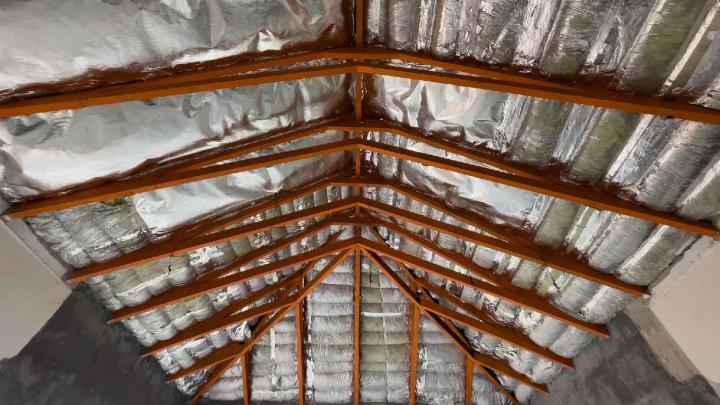
A radiant barrier is a thin layer of highly reflective material (typically aluminum foil) installed on the underside of your roof deck. It reflects radiant heat back toward the roof instead of allowing it to radiate into the attic space.
Performance in North Carolina
- Reduces radiant heat gain by 90-97%: Most infrared radiation bounces back
- Lowers attic temperature by 20-30°F: Attic air stays significantly cooler
- Reduces heat load on insulation: Less heat trying to conduct through insulation
- Protects ductwork: Cooler attic = less heat stress on ducts and HVAC equipment
Limitation
Radiant barriers don't provide R-value. They don't resist conductive heat transfer. If you installed ONLY a radiant barrier without insulation, you'd have poor energy performance because conductive heat would still flow freely.
The Power of Combining Both
Here's where it gets interesting: radiant barriers and insulation work synergistically.
Without Radiant Barrier (Traditional Insulation Only)
- Attic temperature: 145°F
- Top of insulation: 130°F
- Heat trying to conduct through insulation: High
- R-49 insulation works hard to resist this heat
With Radiant Barrier + Insulation
- Attic temperature: 115°F (30° cooler)
- Top of insulation: 100°F (30° cooler)
- Heat trying to conduct through insulation: Significantly reduced
- R-49 insulation has less heat to resist, performs more effectively
The radiant barrier reduces the heat load on your insulation, allowing the insulation to work more effectively. It's like reducing the difficulty level of the insulation's job.
Real-World Performance: The Numbers
Theory is nice, but what about actual results?
Energy Savings: Insulation Alone vs. Insulation + Radiant Barrier
Upgrading from R-15 to R-49 insulation alone:
- Summer cooling cost reduction: 20-25%
- Typical annual savings: $300-400
- Payback period: 6-8 years
Upgrading from R-15 to R-49 insulation + radiant barrier:
- Summer cooling cost reduction: 28-35%
- Typical annual savings: $400-550
- Incremental payback period for radiant barrier: 8-12 years
The radiant barrier adds an extra 8-10% savings beyond insulation alone. That translates to an additional $100-150 annually in a typical Triad-area home.
Comfort Improvements
Beyond energy bills, radiant barriers provide noticeable comfort benefits:
- Upstairs bedrooms stay cooler: 2-4°F cooler in summer
- More even temperatures: Less difference between upstairs and downstairs
- AC runs less frequently: Shorter cycles with longer rest periods
- Faster cool-down: Home reaches target temperature quicker after being warm
When Radiant Barriers Make the Most Sense
Radiant barriers aren't equally beneficial in all situations. They're most valuable when:
Strong Candidates for Radiant Barriers
1. Hot, Sunny Climates
North Carolina fits this perfectly. Long cooling seasons (May-September) with intense summer sun create conditions where radiant barriers shine.
2. Dark-Colored Roofs
Dark shingles absorb more solar energy, creating hotter roof decks. Radiant barriers offset this by reflecting heat before it enters the attic.
3. Ductwork in Attic
If your HVAC ducts run through the attic (common in ranch homes and additions), a radiant barrier creates a cooler environment for ducts, reducing heat gain/loss.
4. Upstairs Comfort Issues
If bedrooms above the attic are uncomfortable in summer despite adequate insulation, a radiant barrier can make a meaningful difference.
5. New Construction or Major Renovation
Installation is easiest and most cost-effective when attic is accessible. Adding a radiant barrier during new insulation installation makes economic sense.
Weaker Candidates for Radiant Barriers
1. Cold Climates
If you live where heating costs exceed cooling costs (not typical in NC), radiant barriers provide minimal benefit. Insulation alone is more cost-effective.
2. Already Cool Attics
Some homes (often with excellent ventilation and light-colored roofs) don't have severe attic heat problems. Radiant barriers provide less benefit here.
3. Limited Budget
If you must choose between adequate insulation OR a radiant barrier, choose insulation every time. R-49 insulation without radiant barrier beats R-30 insulation with radiant barrier.
4. Short-Term Ownership
Planning to sell within 2-3 years? You won't recoup the radiant barrier investment through energy savings, though it might add selling appeal.
Cost Analysis: Is It Worth It for NC Homes?
Let's look at real numbers for a typical 1,800 sq ft attic in the Triad area:
Scenario A: Insulation Only
- R-15 to R-49 upgrade: $2,600
- Annual energy savings: $350
- Payback period: 7.4 years
- 20-year net savings: $4,400
Scenario B: Insulation + Radiant Barrier
- R-15 to R-49 upgrade: $2,600
- Radiant barrier addition: $1,200
- Total: $3,800
- Annual energy savings: $480
- Payback period: 7.9 years
- 20-year net savings: $5,800
The Radiant Barrier Incremental Analysis
- Additional cost: $1,200
- Additional annual savings: $130
- Payback period: 9.2 years
- 20-year incremental benefit: $1,400
Conclusion: For homeowners planning to stay 10+ years, the radiant barrier investment pays off. For shorter timelines, it's marginal.
Common Myths About Radiant Barriers
Myth #1: "Radiant Barriers Replace Insulation"
Reality: No! You need both. Radiant barriers address radiant heat; insulation addresses conductive heat. They're complementary, not substitutes.
Myth #2: "Radiant Barriers Cause Condensation Problems"
Reality: Not when installed correctly with proper ventilation. This myth comes from improper installations blocking airflow. Professional installation avoids this.
Myth #3: "All Radiant Barriers Are the Same"
Reality: Quality varies. Look for products with high reflectivity (97%+), durability (reinforced foil), and proper installation methods.
Myth #4: "Radiant Barriers Only Help in Summer"
Reality: Primary benefit is summer cooling (which matters most in NC), but they do provide minor winter benefits by reducing heat loss from living space.
Our Recommendation for North Carolina Homeowners
After thousands of installations throughout Greensboro, Winston-Salem, and High Point, here's our honest take:
Always Get: R-49 Insulation
This is non-negotiable. Adequate traditional insulation is the foundation of energy efficiency. Never skimp on insulation to afford a radiant barrier.
Strongly Consider: Radiant Barrier If...
- You're already upgrading insulation (incremental cost is modest)
- You have upstairs comfort issues
- You plan to stay in your home 8+ years
- Your budget allows for both
- You have HVAC equipment or ductwork in attic
Skip or Defer: Radiant Barrier If...
- Budget is tight (insulation comes first)
- You plan to sell within 5 years
- Your attic stays relatively cool already
- You're prioritizing other home improvements
The Sweet Spot
For most North Carolina homeowners upgrading from inadequate insulation (R-19 or below), we recommend doing both at once. The combined installation is more cost-effective than adding the radiant barrier later, and you benefit from the synergy immediately.
Making Your Decision
Ask yourself these questions:
- What's my current R-value? (If below R-38, prioritize getting to R-49 first)
- How long do I plan to stay in this home? (8+ years favors radiant barrier)
- Do I have comfort issues despite adequate insulation? (Strong indicator for radiant barrier)
- Is my attic accessible for installation right now? (Doing both together saves money)
- What's my budget? (Don't sacrifice insulation quality to afford radiant barrier)
Get Expert Guidance
At 4 Seasons Insulation, we don't automatically upsell radiant barriers. We assess your specific situation—current insulation, attic conditions, budget, and goals—and recommend what actually makes sense for YOU.
Our comprehensive assessment includes:
- Current R-value measurement
- Attic temperature evaluation
- Analysis of your specific heat gain/loss patterns
- Cost-benefit analysis for your situation
- Honest recommendation (we'll tell you if radiant barrier isn't worth it for your home)
- Quotes for insulation alone and insulation + radiant barrier
We've helped thousands of homeowners make this decision. Some choose both, some choose insulation only—we support either based on what's right for each situation.
Wondering whether your home would benefit from a radiant barrier? Contact us for a free assessment. We'll show you actual temperature measurements, explain expected performance for YOUR home, and help you make an informed decision.
Because the right answer isn't always "yes" or "no"—it's "it depends on your specific situation."
Get the facts. Make the smart decision. Stay comfortable.