Cold floors and drafts tend to get your attention when people start spending more time indoors. Before Thanksgiving in the Triad, use the rooms you live in to make a short list of comfort problems. The goal is to identify where an inspection should start, rather than buy an upgrade based on the room that feels coldest.
A draft beside a door, a chilly floor over a crawl space, and a bedroom that gets little warm air can have different causes. Describe the symptom as plainly as possible. That gives an insulation contractor or HVAC technician something better to work with than a request to make the whole house warmer.
Track when and where the problem happens
Walk through the house on a cool morning before changing the thermostat. Note the rooms, the area of each room that feels uncomfortable, and whether the heating system is running. Repeat the check on another day if the first observation is unclear. A pattern is more useful than a single cold moment.
Keep the description specific: the floor beside the outside wall, the hall below the attic access, or the bedroom at the end of the duct run. Mention any recent renovation or repair. A room that changed after work was done may need a different investigation from one that has always been uncomfortable.
Record visible gaps around an exterior door or a window that does not latch properly. Weatherstripping and hardware repairs are reasonable early questions. Avoid using a flame to look for air movement. An inspection can evaluate leakage without introducing that risk.
Look at the top and bottom of the house together
The Department of Energy's air-sealing guide explains the winter stack effect: air escaping through a leaky attic ceiling can help draw replacement air into the lower part of the house. That is one reason an uncomfortable first floor can justify an attic inspection as well as a crawl-space inspection.
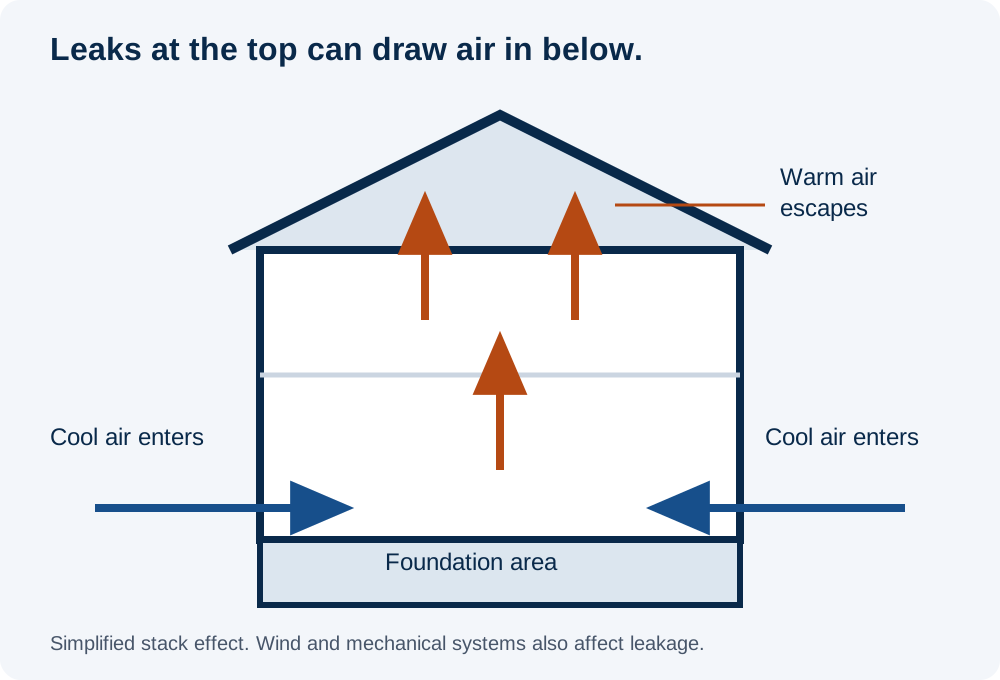
A drawing cannot identify your home's leaks. Use it to ask how the proposed work connects. If an estimate covers attic insulation, ask whether ceiling air leaks are included. If it covers the floor, ask how the underlying crawl-space conditions affect the repair.
Check the air delivery before blaming the walls
A room that gets little warm air may need an HVAC evaluation. Make sure furniture and rugs are clear of supply and return grilles. Check the filter according to the equipment instructions. Tell the technician about rooms that lag behind the thermostat and any unusual equipment behavior.
ENERGY STAR says typical forced-air duct systems lose about 20% to 30% of the air moving through them through leaks, holes, and poor connections. That is a general estimate, not a measurement of your house. Ducts in an attic, crawl space, or unfinished basement deserve inspection when air delivery is uneven.
Ask which trade is responsible for each proposed repair. An insulation estimate should not leave you assuming that disconnected ductwork or a heating-system fault will be fixed automatically. Put those responsibilities in writing before scheduling work.
| Complaint | First question |
|---|---|
| Draft at a closed exterior door | Does it latch and seal evenly? |
| Cold floor above the crawl space | Is floor insulation present, dry, and properly supported? |
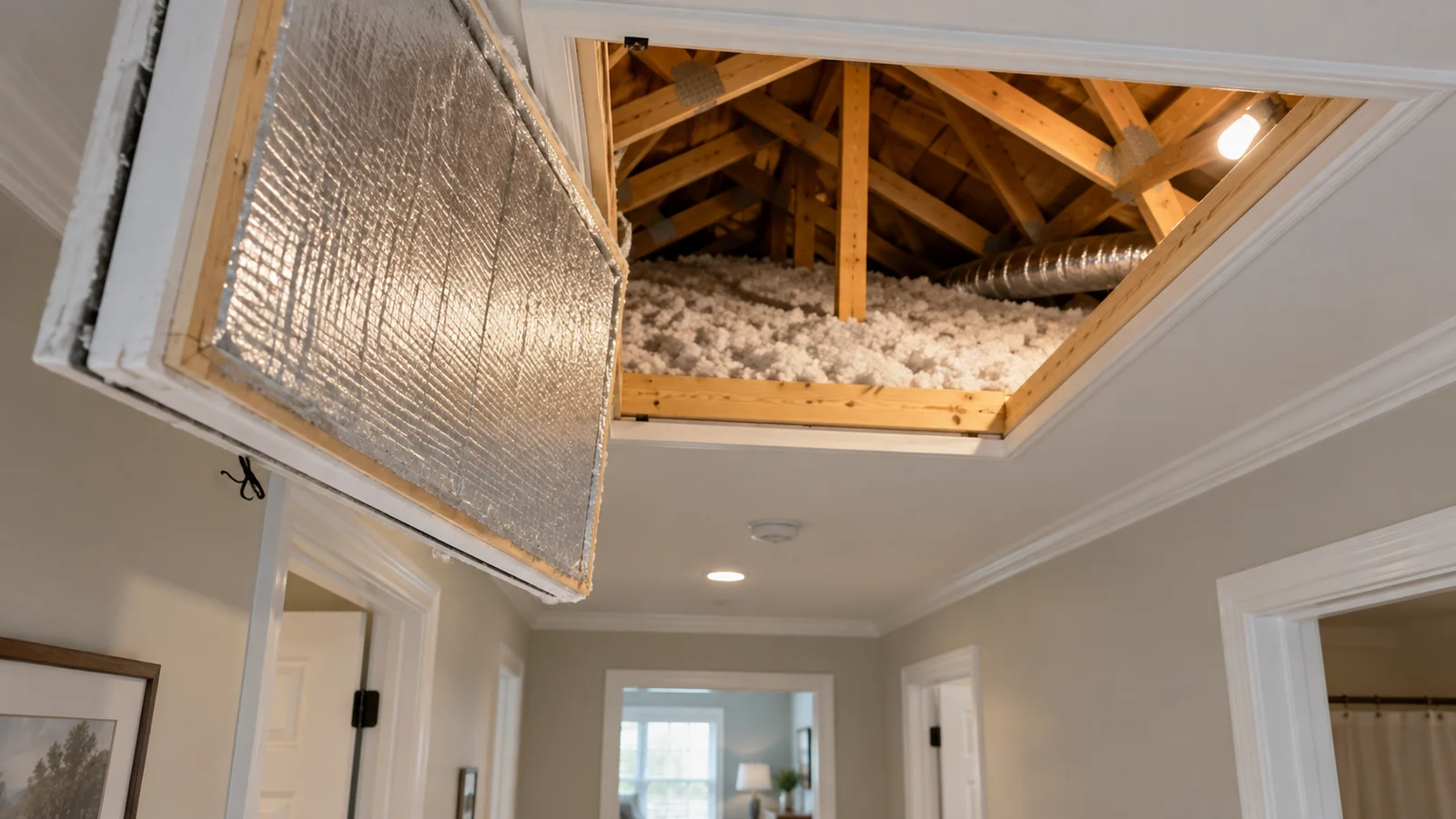
| Chilly hallway below attic access | Is the access insulated and air sealed? |
| One room gets weak airflow | Is there a duct, airflow, or equipment fault? |
| Cold finished basement | Where is the insulation boundary, and is moisture present? |
Make useful repairs before guests arrive
Separate the small accessible repairs from work that needs an inspection. Clearing a blocked register and repairing a worn door seal are different jobs from entering the attic or changing a crawl-space assembly. The short list helps you get the easy items done while arranging the larger assessment.
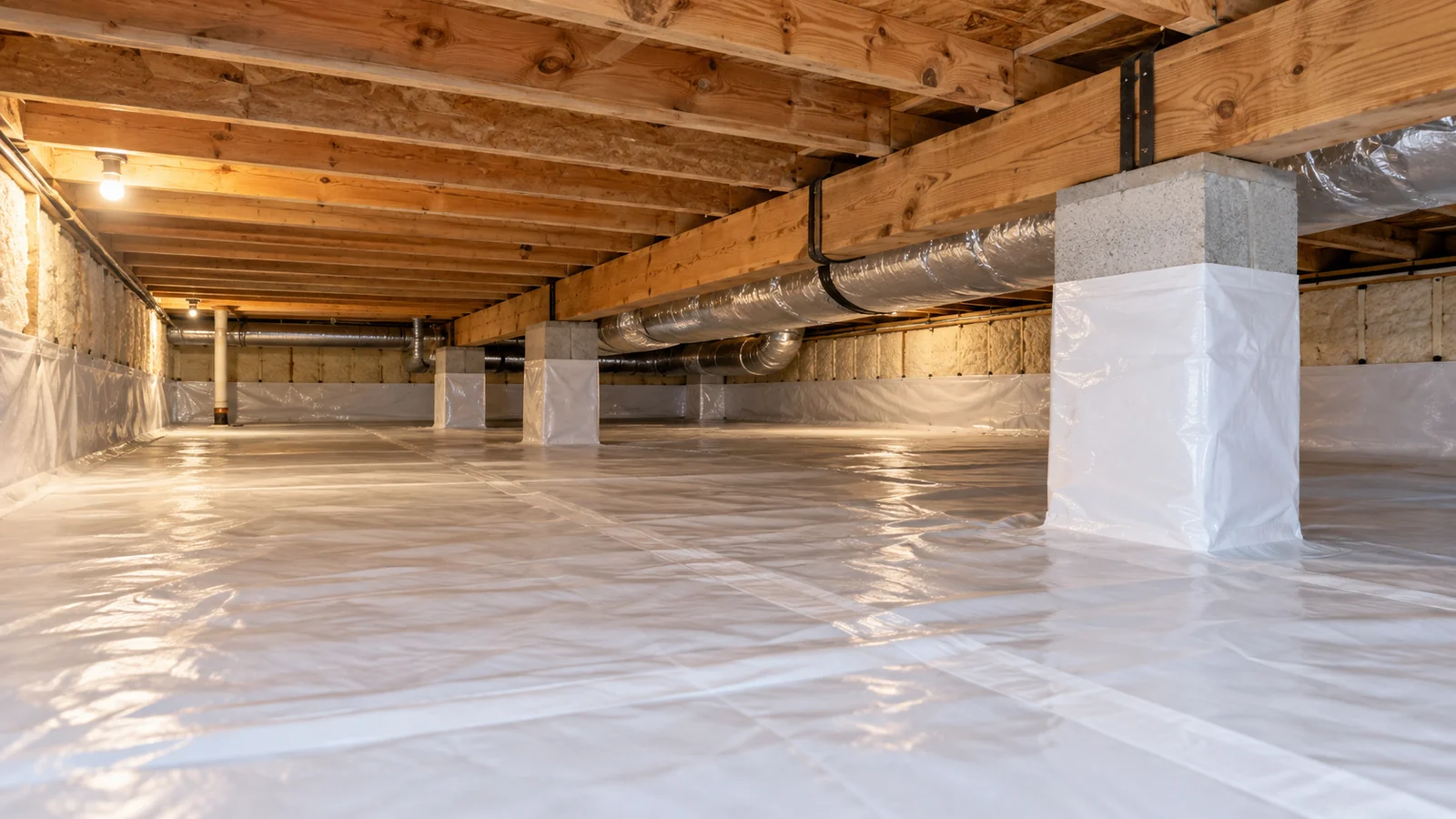
For rooms above the crawl space, review our crawl-space winter preparation guide before requesting work. Dampness or fallen material changes what a floor insulation job should include. A rug may make a seating area feel nicer, but it will not tell you what is happening underneath it.
Ask the contractor to explain the expected result
Choose a few clear outcomes to discuss: less draft at the attic access, repaired insulation beneath a room, or a defined moisture-control plan. Ask how the contractor will document the completed work and what symptoms would need a follow-up from another trade.
Request an estimate from 4 Seasons Insulation for attic and crawl-space improvements in Greensboro, Winston-Salem, and High Point. Include your room-by-room notes so the visit starts with the comfort problems that matter to you.
Technical sources checked October 8, 2026. Feature photo is AI-generated illustrative imagery, not a customer project.