Winter energy costs are a good reason to look above your ceiling and beneath your floors this fall. A leaky attic or poorly insulated crawl space gives your heating system more work to do every time outdoor temperatures fall. For homeowners in Greensboro, Winston-Salem, and High Point, October is a practical time to find those problems before the house needs steady heat.
The case for doing that work is getting stronger. In its October 6, 2026 Short-Term Energy Outlook, the U.S. Energy Information Administration forecasts a national residential electricity price of 18.2 cents per kilowatt-hour for 2026, compared with 17.3 cents in 2025. That is about a 5.2% increase, calculated from the rounded figures. Its 2027 forecast rises to 18.7 cents. These are national averages and forecasts; your utility's rates, fees, and your home's usage determine your bill.
The Triad's heating season is closer than it feels
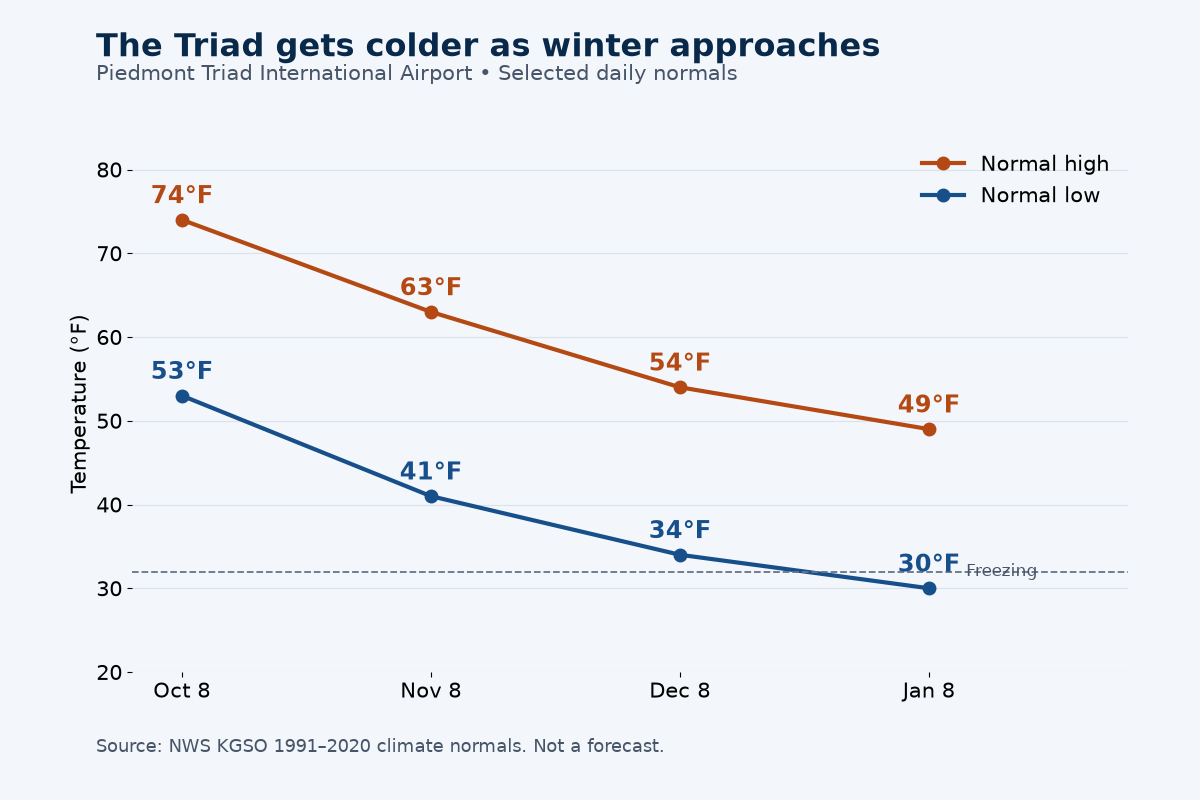
A warm afternoon can hide how much the season is changing. The National Weather Service's 1991-2020 daily climate normals for Piedmont Triad International Airport show a normal low of 53°F on October 8 and 30°F on January 8. That is a 23-degree seasonal drop. The airport is a regional reference for the Triad, rather than a separate measurement for every neighborhood in its three cities.
Recent weather has made the transition harder to judge by feel. The North Carolina State Climate Office's September 2026 review reports Greensboro's sixth-warmest September on record. Across the state, a September 22 cold front then brought a sharp cooldown, with highs in the mid-60s by September 24 instead of the preceding mid-90s. A warm stretch followed by cooler weather is a poor substitute for checking the condition of your insulation.
Prepare for cold snaps without betting on a winter prediction
Headlines about a severe winter deserve a closer look. As of October 8, the Climate Prediction Center's September 17 seasonal outlook does not establish a certain, exceptionally cold winter for the Triad. It discusses competing influences over the Southeast, including El Niño and longer-term temperature trends. Seasonal outlooks describe odds over several months; they do not tell us the temperature of a particular January night.
Your home still needs to handle those nights. Air sealing and insulation remain useful during an ordinary winter, a cold outbreak, and next summer's heat. Waiting for a confident long-range forecast leaves the same gaps in the ceiling and the same exposed floor above the crawl space.
Find the places where heat leaves the house
Start with the attic access. A loose hatch or thin pull-down stair cover interrupts the insulation above the hallway. Have the surrounding ceiling checked for openings as part of an attic insulation assessment. The work should address air leaks as well as the amount and coverage of insulation.
Beneath the house, cold floors are a reason to inspect the crawl space. Fallen insulation, a poorly fitted access door, and moisture damage each call for a different repair. A finished basement needs attention too, especially if its rooms feel cold around the outside walls. Ask where the home's insulated boundary runs before choosing materials. Adding insulation to the wrong surface can leave the original comfort problem unresolved.
| Area | Clue at home | What to ask about |
|---|---|---|
| Attic | Draft near access; uneven room temperatures | Air leaks, insulation coverage, safe ventilation |
| Crawl space | Cold floors; hanging or damp insulation | Water source and appropriate floor or wall insulation |
| Basement | Cold perimeter; damp walls | Moisture repair and the location of the insulated boundary |
| Heating ducts | One room gets little warm air | Disconnected ducts, leaks, or an HVAC problem |
Ask for a plan before buying more insulation
ENERGY STAR estimates an average 15% reduction in heating and cooling costs from home air sealing combined with added insulation in attics and floors over crawl spaces or basements. It is an average estimate, not a promise for your house or a 15% reduction in every charge on your utility bill. Existing conditions matter.
A useful estimate identifies the problem areas, the proposed repairs, and any work that has to happen first. Wet insulation needs a moisture diagnosis. A roof leak needs a repair. Crawl-space improvements should account for drainage and the way the space handles humidity. Our crawl-space insulation services start with the condition of the space beneath your home.
Bring a recent energy bill and a list of rooms that feel uncomfortable. Those details give the inspection a clear purpose. Request an estimate from 4 Seasons Insulation to get a plan for your Triad home before the next cold stretch arrives.
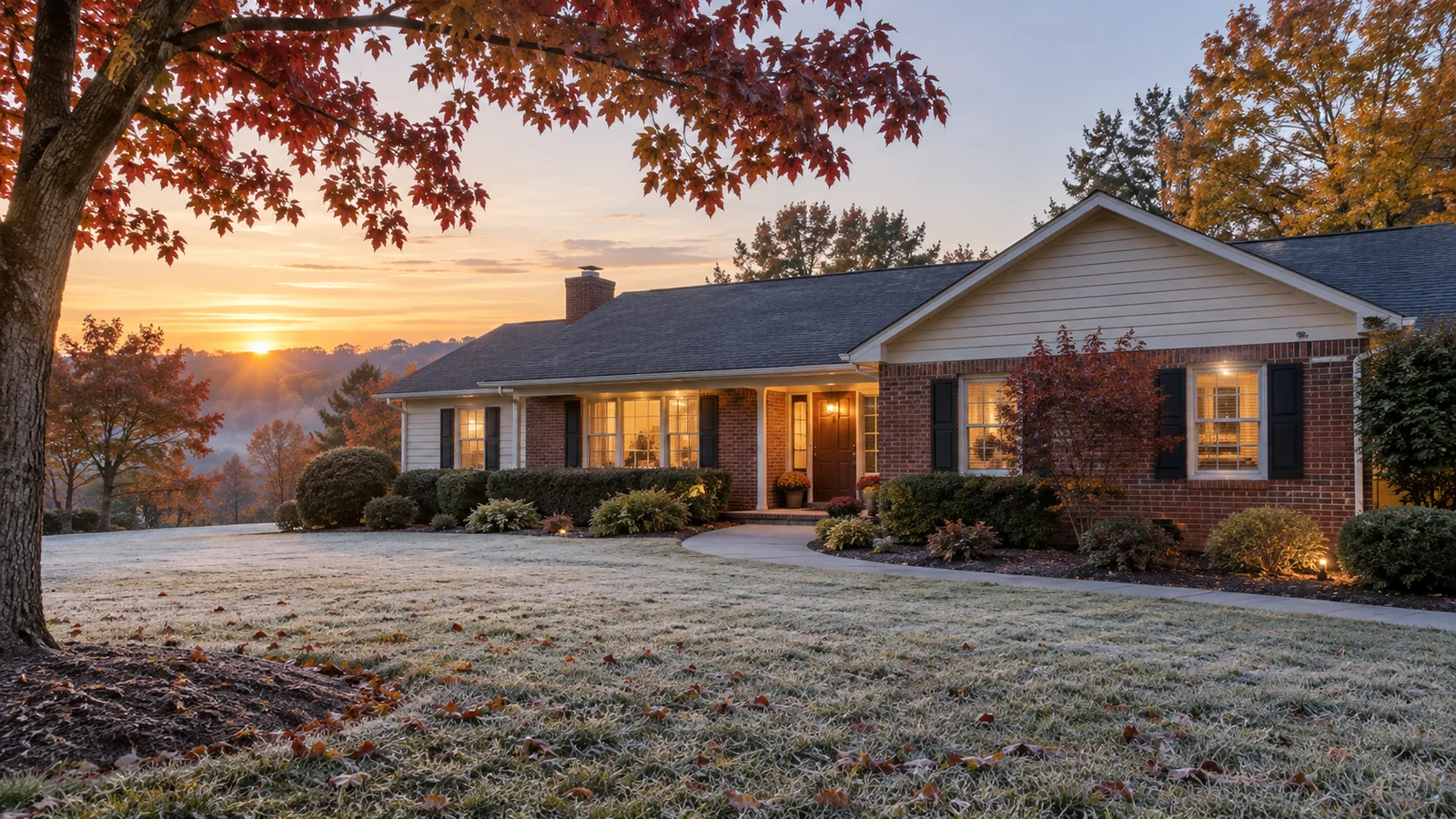
Energy and weather sources checked October 8, 2026. Feature photo is AI-generated illustrative imagery, not a customer project.